Why Does New Concrete Crack? What's Normal and What Isn't
Concrete shrinks as it dries and cures, so some cracking in a new slab is normal. Fine cracks that stay tight are usually acceptable; displaced, widening or widespread cracks are worth raising with your installer.
Short answer: Concrete cracks mainly because it shrinks as water leaves it. Control joints are meant to decide where it cracks. Hairline cracks that stay flat and tight are usually normal. Cracks where one side is higher than the other, cracks wider than about 1/8", or cracks running across many slabs are worth raising with the installer.
A new driveway, patio or garage slab is a big purchase, so finding cracks in new concrete within weeks feels wrong. It often isn't. Concrete is strong when you squeeze it but weak when you pull it apart, and as it cures it pulls on itself. The question isn't whether new concrete will crack, but whether the cracks you're seeing are the normal kind.
What causes concrete to crack
Plastic shrinkage (the first few hours)
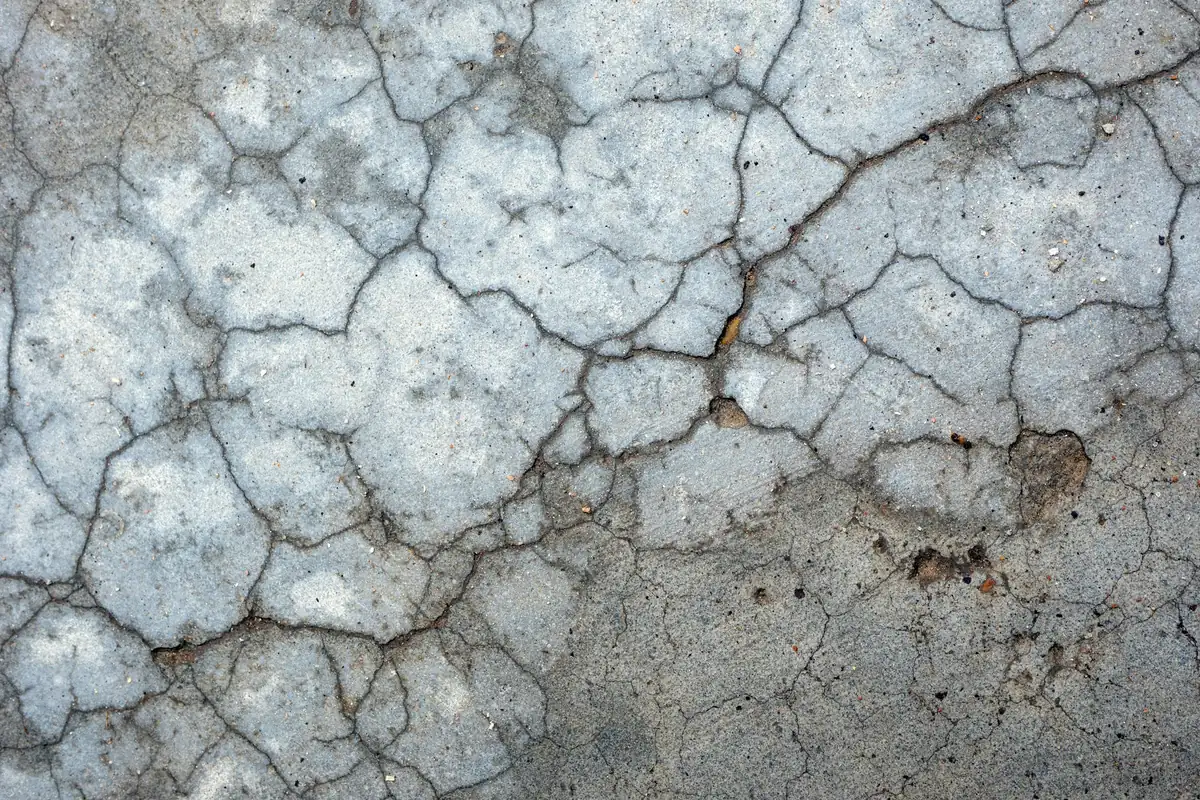
While the concrete is still soft, water evaporates from the surface. On hot, dry or windy days it can leave the top faster than it can be replaced from below, and the surface shrinks and tears. The result is short, shallow cracks, often in a random or roughly parallel pattern. They look alarming but rarely go deep.
Drying shrinkage (weeks to months)
Hardened concrete keeps losing water and shrinking for a long time. A slab that is held in place by the ground beneath it can't shrink freely, so it cracks to relieve the stress. More water in the mix generally means more shrinkage, which is one reason a very wet, easy-to-place mix tends to crack more.
Control joints too far apart, or cut too late
Control joints are the grooves tooled or sawn into the slab. They create weak lines so the shrinkage crack forms neatly inside the groove instead of wandering across the surface. If the joints are spaced too far apart, the panels between them are too big and crack in the middle anyway. A common rule of thumb is that joint spacing in feet should be no more than two to three times the slab thickness in inches. If the joints are sawn too late, the slab may already have cracked before the saw arrived.
Poor subgrade
The soil and gravel under the slab need to be firm and evenly compacted. Soft spots, loose fill, or areas that get soaked later can settle, leaving part of the slab unsupported. Cracks from this cause often show one side dropping lower than the other.
Early loading
Concrete gains strength over weeks. Driving a car, a delivery truck or a loaded trailer onto a new slab too soon, especially near the edges, can crack it. Edges and corners are the weakest spots.
Poor curing
Curing means keeping the concrete moist and at a reasonable temperature while it gains strength. Concrete that dries out too fast, or freezes while young, ends up weaker at the surface and more prone to cracking and flaking.
Acceptable cracks in a concrete slab vs. cracks worth raising
Use width, level and pattern rather than the number of cracks alone. These are the same thresholds we use across the site:
| What you see | Usually |
|---|---|
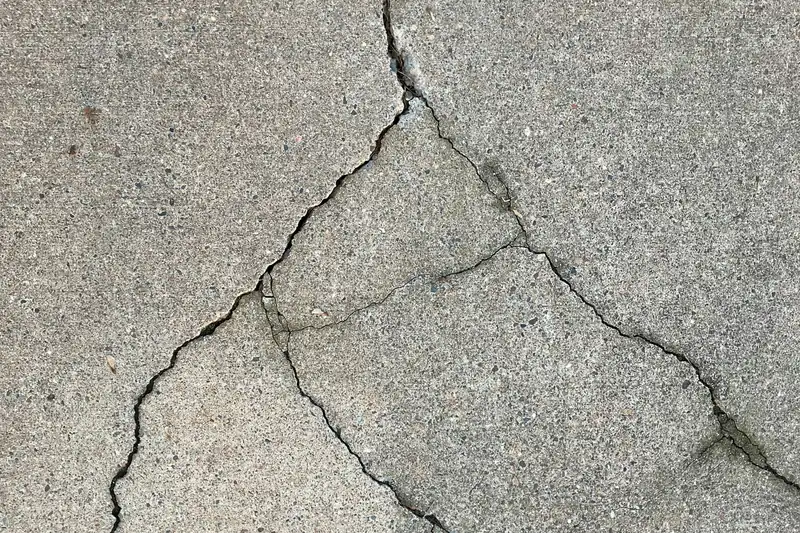
| Hairline cracks under 1/16", flat, inside or near control joints | Normal shrinkage. Cosmetic. |
| Fine surface map cracking (a web of shallow lines) | Usually a surface or curing issue. Cosmetic unless the surface starts flaking. |
| Cracks 1/16" to 1/8", flat on both sides | Common. Seal them if water gets in, especially in freezing climates. |
| Cracks 1/8" to 1/4", or growing | Worth raising with the installer and having looked at. |
| One side higher than the other (displacement) | Points to subgrade or support problems. Raise it. |
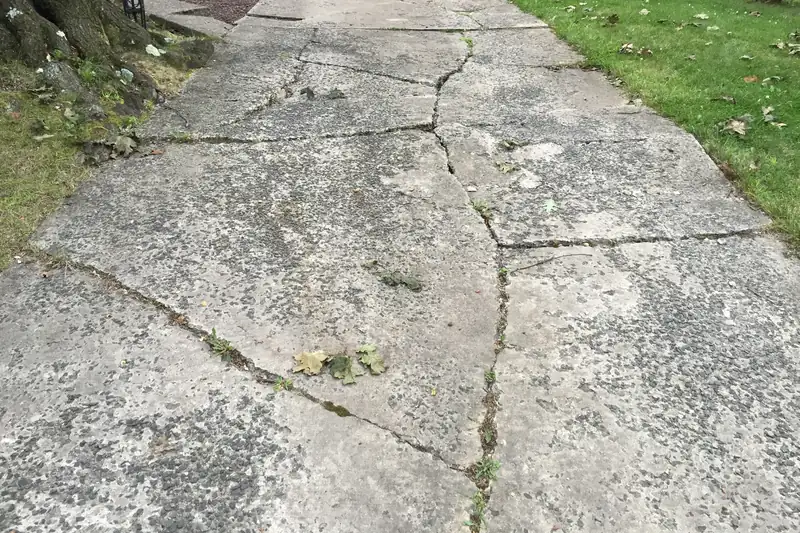
| Cracks running across many panels, ignoring the joints | Suggests a joint, subgrade or mix problem. Raise it. |
For a walk-through of which patterns are typical in concrete, see normal foundation cracks. The same shrinkage logic applies to slabs.
How to check the cracks yourself
- Measure the width. A coin edge or a set of feeler gauges works. A credit card is roughly 1/32" thick, which helps for scale.
- Check the level. Run your hand or a straightedge across the crack. If you feel a lip, note which side is higher.
- Note the pattern. Are the cracks in the joints, between joints, at corners, or across the whole slab?
- Mark and date them. Pencil marks at the crack ends and a photo with a tape measure in frame let you see whether they grow over the coming months.
- Look at drainage. Downspouts or runoff that pour onto or under the slab can soften the subgrade over time.
Talking to your installer
If the cracks fall into the "worth raising" rows, contact the contractor who poured it. Keep it factual: send dated photos with a tape measure for scale, the widths you measured, and whether any edges are uneven. Ask what they think caused it and what they suggest. Many installers will look at a new slab, and having clear notes makes that conversation easier.
Your original contract or paperwork is the place to check what was agreed about the work. If you and the installer disagree about whether a crack is a problem, an independent opinion helps. For a home's foundation or a structural slab with displacement, wide or growing cracks, a licensed structural engineer can assess it. Independent engineers don't sell repairs, so their opinion isn't tied to a sale.
If a crack in a house slab or foundation is wider than 1/4", displaced, growing quickly, or comes with sticking doors or sloping floors, get a structural engineer to look at it rather than waiting.
What to do about normal cracks
Normal shrinkage cracks don't need much. Leave hairline cracks alone, or seal those that let water in with a flexible polyurethane sealant so freeze-thaw cycles don't widen them. Keep the control joints clear of debris, and avoid de-icing salts on concrete in its first winter. Our concrete crack repair guide covers the filling steps, and the driveway crack repair guide covers driveways specifically. If you're unsure where your crack fits, run it through the Crack Checker.
 Concrete crack repairHow to repair cracks in concrete slabs, garage floors and patios: picking the right filler, steps for small…
 Driveway crack repairHow to repair concrete and asphalt driveway cracks: fillers vs. sealers, step-by-step DIY repair, the best…
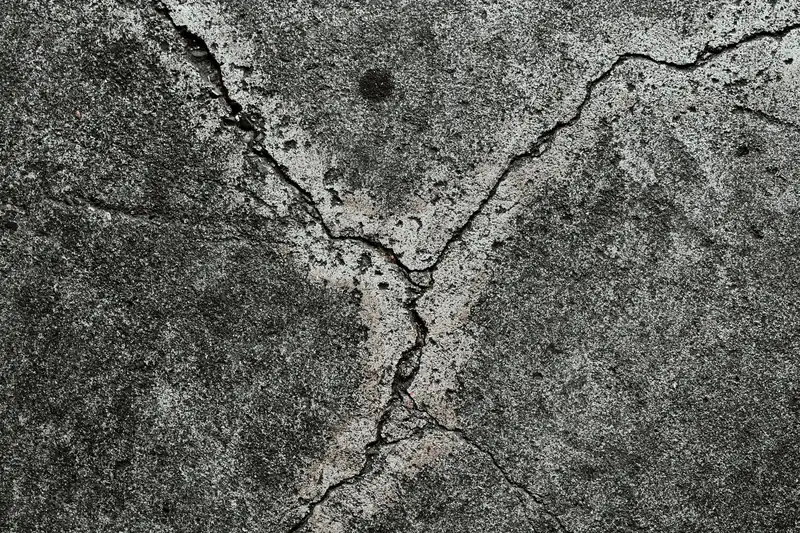 Concrete crack fillerHow to choose a concrete crack filler: polyurethane, epoxy, latex patch, self-leveling sealant and repair…
More from the blog
 Drywall Cracks That Keep Coming Back: Why, and How to Fix Them for GoodWhy patched drywall cracks reappear, and how to repair them so they stay gone.
 Stair-Step Cracks in Brick and Block Walls: When to WorryWhat stair-step cracks in brick and block walls mean, how to judge them, and when it's time for an engineer.
 Who Fixes Foundation Cracks? Who to Call FirstEngineer, foundation contractor or waterproofer? Who to call about a foundation crack, and in what order.
Not sure about your crack? The Crack Checker asks four questions and tells you whether to monitor it, fix it or call an engineer.